Join the hunt with two thrilling adventures: Steel's Treasure and the newly released Steel's Gold!

The epic story of U.S. Air Force Captain William Steel, an intelligence officer with serious authority issues, and his hunt for billions of dollars of lost WWII Japanese treasure hidden in the mountainous jungles of the Philippines.

Showing posts with label Negritos. Show all posts

Tuesday, May 7, 2013

The Marcos Legacy: Still Poison After All These Years


It is amazing after all these years that the Marcos’s continue to drag the Philippine people through the muck, tarnishing their image on the world stage.  My novel  Steel’s Treasure weaves characters from the Marcos regime and their poisonous corruption  with the book’s protagonist Capt. William Steel’s  quest for lost WW II Japanese treasure.  

I wasn’t surprised, more embarrassed for the Filipino people, when recently, Imelda Marcos’ former aide, Vilma Bautista, appeared in court in NYC charged with illegally selling a Monet painting.  Apparently, several more famous paintings were found in Bautista’s apartment.   Bautista was attempting to unload them for tens of millions of dollars and had reportedly stolen them from Marcos’s Upper East Side townhouse —sometime after the dictator’s fall from power. 


 The paintings are yet another reminder of the Marcos’s long legacy of stolen wealth.


Along with the Bautista article was press on the deteriorating condition of Imelda’s shoe collection housed in a special museum in Marikina, Manila. It seems insects and moisture are destroying the shoes.   For years now, photos of the thousands of pairs of Imelda’s designer shoes have been synonymous with the Marcos’s decade’s long rape and pillage of the Philippine economy.


My involvement with the Marcos’s came as a young U.S. Air Force captain stationed in the Philippines.  I was assigned to 13th Air Force at Clark Air Base and in February 1986, watched firsthand, as the Philippine “People Powered Revolution” overthrew the Marcos regime.   Behind the scenes, at the 13th Air Force command center, I read the frantic cables between Washington and the Marcos’s trying to figure out how to solve the crisis. 


Clark Air Base F-4's in the 1980's


The U.S. urged Marcos to leave peacefully and not use his military and violence to suppress the demonstrators.   Washington sent Clark-based fighter aircraft in low level “shock and awe” flights over Manila, hoping that the roar of the jet engines would persuade Marcos that U.S. military forces were supporting the opposition.   Finally, after calls from President Reagan, who had a close relationship with the Marcos’s – Ferdinand, Imelda and family agreed to leave the country. 

     They were flown by U.S. helicopter to Clark.  An Air Force security police buddy of mine helped the Marcos’ off of the helicopter, personally carrying diaper bags crammed with money and jewelry—evidence of their hasty departure from the palace.*    Curious about the spectacle, I watched the Marcos family shop at the military base exchange store for the personal items they needed for their trip-- then get on a C-130 aircraft and head out for Honolulu.

Before the revolution
To his credit, Marcos did refrain from using direct violence against the masses of demonstrators, unlike the Chinese government which mowed down protesters in Tienanmen Square.    As he sat in exile in Hawaii, after the shell-shock had worn off, I often wondered if Marcos wished he had listened to his dog-faced chief of the armed forces, General Ver, who had wanted to use tanks and force to break up the demonstrators.
After the revolution


Right after the revolution, a buddy and I traveled to Manila and scammed our way into a tour of the looted former-presidential palace.   It was quite an eye opener seeing the opulence in which the Marco’s lived— juxtaposed with the sea of impoverished people squatting in Manila. 
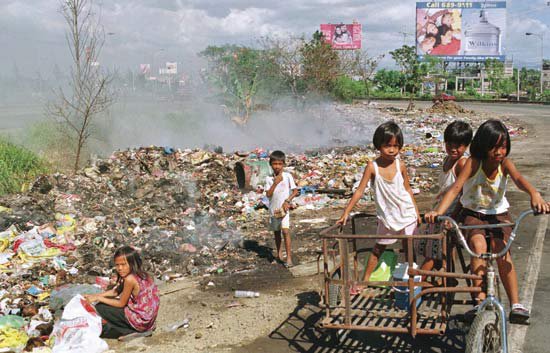
  I remembered thinking what rotten people the Marcos’s were, and whether it was it worth it for the U.S. to have supported such a clearly despot and corrupt government for all those years.

* It was reported by the press that, when Marcos fled, U.S. Customs agents in Hawaii discovered 24 suitcases of gold bricks and diamond jewelry hidden in diaper bags and in addition, certificates for gold bullion valued in the billions of dollars.

Thursday, April 25, 2013

The Treasure Steel is Chasing: Yamashita's Gold


While the novel Steel’s Treasure is part fiction, it does serve a whopping dose of historical fact.  The book’s principal character, Air Force Capt. William Steel, is obsessed with the legend of Yamashita’s treasure, or Yamashita’s gold. The infamous Japanese General Tomoyuki Yamashita, the “Tiger of Malay,” commanded imperial army troops in the Philippines and is believed to have stashed billions of dollars’ worth of treasure in vaults scattered around the islands.   

General Yamashita,
the Tiger of Malay
The imperial army amassed the riches during its occupation of Southeast Asia-- looting temples, businesses, and the capital cities. They consolidated their booty in the Philippines with plans to move it to Japan once the U.S. blockades on shipping and air transport ended. There, the wealth would finance the dream of an Asian empire known as the “Greater East Asian Co-Prosperity Sphere” --- a dream permanently put on hold when Japan unconditionally surrendered to ally forces in 1945. 
The treasure remains hidden in secure vaults somewhere in the Philippines’ vast mountainous jungles.   Steel and his Negrito pygmy tribesmen explore a few of these caves and Japanese army command bunkers in their adventures in Steel’s Treasure.


Remote mountainous Philippine jungle where Yamashita’s engineering units constructed elaborate tunnels to house looted treasure.
Yamashita’s engineering teams, using enslaved Filipino civilians and U.S. and allied POWs, built underground chambers, so well hidden that most are still undiscovered. Hundreds if not thousands of the forced laborers died building the sites. In addition to layers of concrete and earth, the vaults were booby-trapped with high explosives and, in some cases, glass tubes of cyanide gas.  None of the Japanese engineers who designed these death traps are thought to have survived the war.  Even the Tiger himself was captured and executed by the Allied Forces, a scene briefly visited in Steel’s Treasure.  He carried to his grave the answer to the question that consumes Steel—where is the treasure?       

Entrance to large underground Japanese bunker complex of the type explored by Steel.    
A Negrito tribal leader points out a rock
with Japanese troops marks with coded
 instructions leading to a treasure site.
Since the war, Steel and other treasure hunters have tried to locate the hidden gold.  Most are amateurs, and a cottage industry has sprung up of locals who offer to sell their “expertise,” complete with forged Japanese maps, to locate the Tiger’s treasure. It is rare that a professional, adequately-funded foreign-led operation makes a run at the fortune.  

Philippine dictator Ferdinand Marcos,
photographed on a bulldozer,
reportedly found part of the Yamashita treasure.
For twenty years, President Marcos and his family had a near monopoly on treasure hunting, crowding out any significant foreign expeditions. Some allege that the Marcos families’ ill-gotten wealth stashed in Swiss bank accounts came from locating some of the Tiger’s stash. Since the overthrow of the Marcos, successive Philippine governments have been more open to letting foreign companies search for the treasure, but few are interested because of corruption and the lack of information on where the sites are located.

Steel’s Treasure is set in the 1980’s in the Philippines’ carnival-like political scene, with a huge U.S. military presence, a corrupt dictatorship, and an active and violent Communist insurgency.  Here, neither Marcos and his crony military officers nor the Communist New Peoples’ Army can prevent Steel, his Filipino side-kick, Jo Jo, and a motley band of Negrito tribesmen from finding gold. 

Negrito tribesmen—armed and dangerous